PROFILE | 42 ACRES | BATH LIFE | ISSUE 552 | WORDS BY NICK WOODHOUSE | READ HERE
The journey from Bath to 42 Acres doesn’t feel like a drive. It’s more a slow, gentle immersion into Somerset’s ancient landscape. As the tarmac fades into narrow, high-hedged lanes, a weathered oak sign quietly directs you down a private gravel track – to an estate that somehow effortlessly combines wellbeing retreat with nature reserve.
Its name is admittedly somewhat of a fiction, or at least an anachronism. Because 42 Acres now runs to over four times its name, at 173 acres; an estate of ancient woodland, rewilded meadow, a walled garden and a lake buzzing with wildlife – all pressed into a fold of east Somerset between Frome and Bruton. At the estate’s beating heart sits The Hermitage, originally a 15th-century monastic retreat for Carthusian monks, later a noble hunting lodge rebuilt by the Duke of Somerset. Its original role of sanctuary has recently been reimagined for today’s solace-seeker, thanks to a sympathetic, eco-conscious restoration that offers light-drenched yoga spaces, a library room, roaring log fires, and accommodation for those looking to reconnect.
The aesthetic throughout is restrained: local and natural materials, paint finishes in calming, neutral tones. The site also runs on renewable energy, thanks to two on-site solar farms and biomass heat systems that use wood-chip harvested from both their 40-acre forest and a local supplier based nearby in Frome.
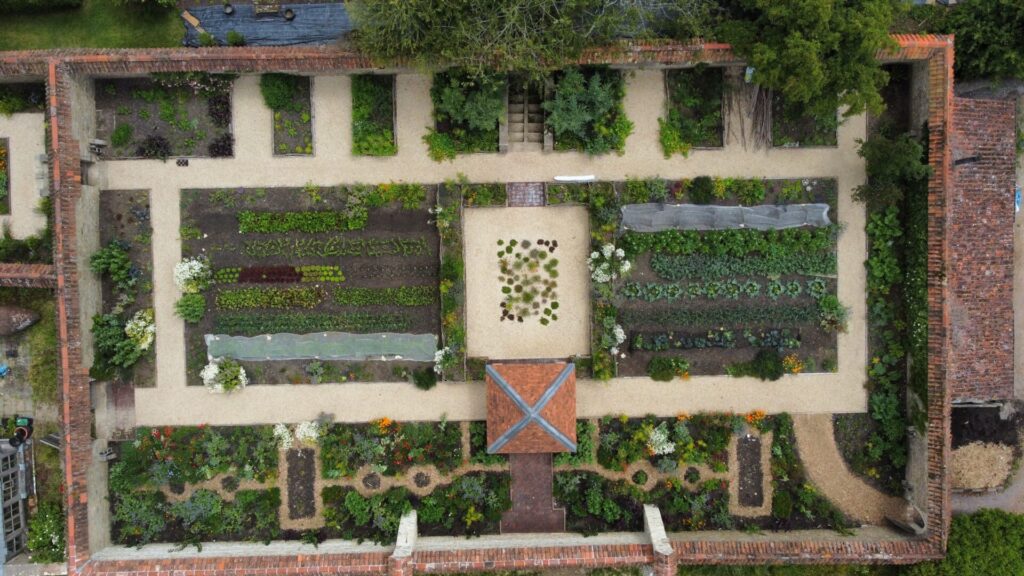
Step outside and the Hermitage’s walled garden is home to a rare thing; the ornamental and the edible grown together. The kitchen works to what it calls a soil-to-gut principle, much of it grown in the walled garden or gathered on the land, the rest sourced locally. A cut-flower plot supplies the rooms and retreat spaces too; perhaps a small, precise reminder of the estate’s larger argument – that beauty and productivity are not in competition; their division a habit, not a rule.
It all began in 2015, when siblings and environmentalists Lara and Seth Tabatznik conceived the idea of making a place where people could reconnect — not just with the land, but also with themselves. What they built refuses to be the one thing; it is a retreat centre, with a calendar of weekends led by yoga teachers, foragers, meditation instructors and regenerative land designers. But it is also a place to book a cottage, to unwind and restore. And underneath both, funded in part by both, it is a working nature restoration project — the sort of long-term ecological project that usually happens on estates closed to the public, hidden behind gates.
Not here. Guests are given the run of the land: trails along the lake edge, a treehouse you have to know how to find, a rowing boat, a wood-fired sauna set among the trees. The rewilding takes several forms, from wartime spruce plantations thinned to let native species come back through, to the re-introduction of beavers to the water. Barn owls hunt the field margins; otters use the lake; hares sit out in the open grass with an unbothered confidence that comes only to those who have worked out nobody here is going to chase them.
A separate enclosure for white storks displays even greater ambition. Once a regular sight in Britain’s ancient wetlands, the last record on our shores of a breeding pair of these rare birds was over six centuries ago, their demise due to overhunting and relentless habitat loss. The stork enclosure at 42 Acres features multiple roosts, both high and low, allowing the birds to explore their environment, along with dedicated nesting platforms. In partnership with The Species Recovery Centre, it is hoped that the enclosure will form part of a national network of habitats and feeding grounds along migration routes and will ultimately see the establishment a free-flying, breeding population here in Somerset.
Wild Weekends now run through the year on rotating themes — nature restoration, medicinal and wild-tended foods, self-care rooted in the landscape — often with a visiting practitioner. And for those wishing to escape just for the day, the estate also offers its Slow Sundays. The invitation is simple: come as you are, and spend a relaxed few hours reconnecting with nature, each other, and the elements. The day centres around fire and water, with guests meeting in the forest glade, and returning there for lunch, cooked over an open flame and using ingredients organically grown and foraged from the land. From there, the pace is entirely yours: take a wild swim in the lake, ease into the wood-fired sauna, or simply rest and restore on land that has been given the very same permission.
What lingers about 42 Acres isn’t any single experience but the sense of a place quietly proving something. You leave, lungs expanded, your shoulders dropped, and your internal clock reset by the gentle rhythm of the Somerset landscape. This is a rare breathing space that leaves you feeling deeply restored, quietly inspired, and beautifully reconnected to the wild world.