PROFILE | ORGANIC BLOOMS | BATH LIFE | ISSUE 547 | WORDS BY NICK WOODHOUSE | READ HERE
It was all hands on deck when I spoke to the team at Organic Blooms, an organic flower farm in Latteridge, to the north of Bristol. It was mid-spring and the team were busy getting the season’s plants established in each of their three polytunnels – ready for the summer ahead.
Set amongst the rolling hills of South Gloucestershire, Latteridge is a small hamlet known locally for its large village green and duck pond, and the ruins of a former church. Dating back to the Middle Ages, the medieval economy of the hamlet revolved around agriculture, with arable fields producing oats and pasture for sheep for the local manor at Iron Acton. Today it is home again to a burgeoning movement that’s transforming the way we cultivate our gardens. Because Organic Blooms isn’t just about flowers; it’s a passionate commitment to sustainability, biodiversity, and reconnecting with nature – in a way that not only benefits the environment, but community too.
The story of Organic Blooms begins however not with seeds, bulbs or tubers – but with a wedding. Its founding director, Jo Wright, had been running horticultural therapy projects for adults with learning difficulties and mental health support needs for some time, under the banner of Natureworks, a community interest company. For Jo however, there was a piece missing. A purely therapeutic horticulture project, however valuable, kept its participants in a kind of bubble. What if the flowers they grew could reach the outside world? What if the world could come to them?
In 2006, Jo attended a friend’s nuptials and had a revelation; every flower in each bouquet and arrangement that day could have been grown locally. The comeback of British cut flowers was beginning to gain momentum, and a new idea was born. Growing and selling cut flowers would become the commercial engine around which an entirely new kind of social enterprise could thrive.
And thrive it has. Standing among the polytunnels and beds, with Bristol’s low skyline somewhere beyond the hedgerows, you get the sense that something very special is happening within the farm’s nine acres — and not just in the soil. Adults with long-term mental health conditions, learning difficulties, and other support needs can be referred to the farm by a health professional. After a trial period, if the placement feels right, they can spend up to three days a week learning the full seasonal rhythm of a working flower nursery and florist business: planting, growing, harvesting, arranging, selling. The farm employs specialist staff to support trainees and can deliver City and Guilds qualifications too — credentials that serve as a vital stepping stone toward employment. Many trainees go on to work in horticulture, others taken on by Organic Blooms itself.
Achieving Soil Association organic certification in February 2017 made Organic Blooms one of the very first certified organic flower growers in the country. It’s an accolade the team wears with genuine pride, and for good reason – the global cut flower industry has a particularly troubling footprint. The vast majority of flowers sold in the UK travel enormous distances, grown under intensive conditions with heavy chemical inputs, before being refrigerated and shipped to our shores. The team at Organic Blooms were keen to counter this – but maintaining soil fertility and combatting pests without chemical input requires innovation, perseverance and patience. Undeterred, the team has worked tirelessly to introduce more sustainable methods such as composting, crop rotation, and plant diversity. These practices not only produce vibrant, healthy blooms but also help foster a more balanced ecosystem that supports bees, butterflies, and other vital pollinators.
On workshop days, the farm opens its doors to a different kind of visitor: enthusiasts and beginners looking to get their hands dirty and their creativity flowering. Wreath-making, seasonal arrangement classes, and floristry courses give the wider community a direct connection to where their flowers come from — and to the people who grow them.
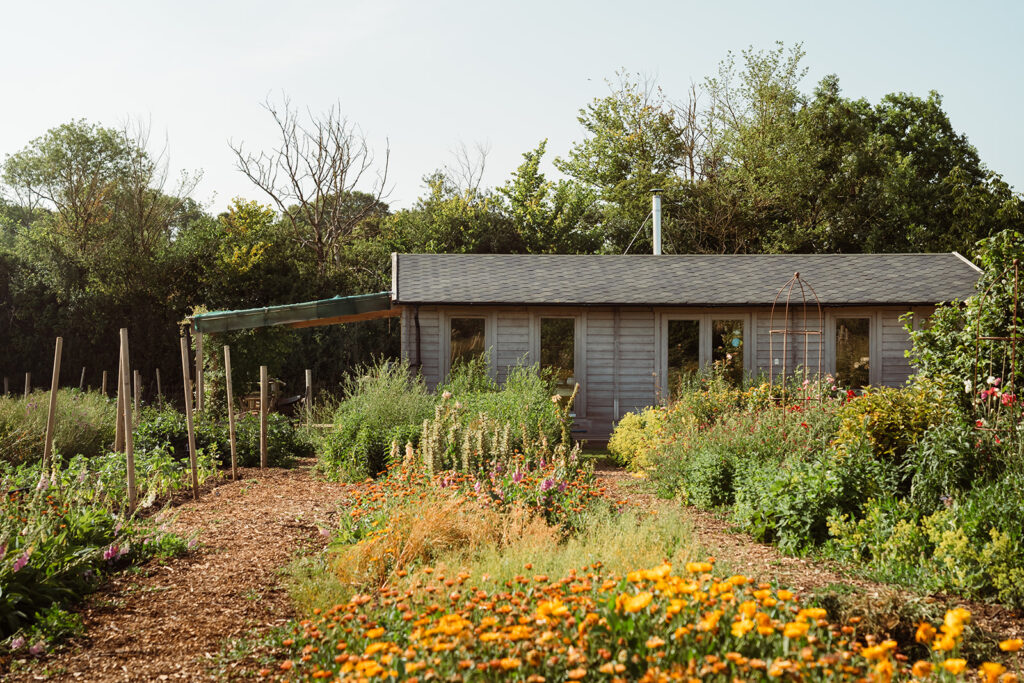
The gardens themselves feature a stunning array of native and heirloom flowers – cornflowers, dahlias, echinacea, and cosmos to name a few— all thriving in harmony. And with each year, new varieties are tested to see if they might join the established stalwarts. This year, butterfly ranunculus is being trialled for the first time in the polytunnels, with the team also hard at work on a new foliage field; one with planting that includes birch, beech, lime, hydrangea and rosehips.
Organic Bloom seems to defy easy categorisation. It is a flower farm, yes. But it’s also a social enterprise, a training provider and a community hub too. More than anything, it is perhaps a quiet argument for a better way of doing things. – for they are not just growing flowers; they are growing lives too.